Raahi
App
Design
Women-led auto rickshaw service for all
Women don’t just book a ride.
They calculate risk.
Raahi is a women-led auto-rickshaw service concept built to reduce the hesitation women feel before commuting, especially in unfamiliar areas or late hours. The goal was to create a ride experience that feels safe, calm, and in control from the first tap to the final drop.
App Design, Branding
After Effects
Figma
Why this app matters?
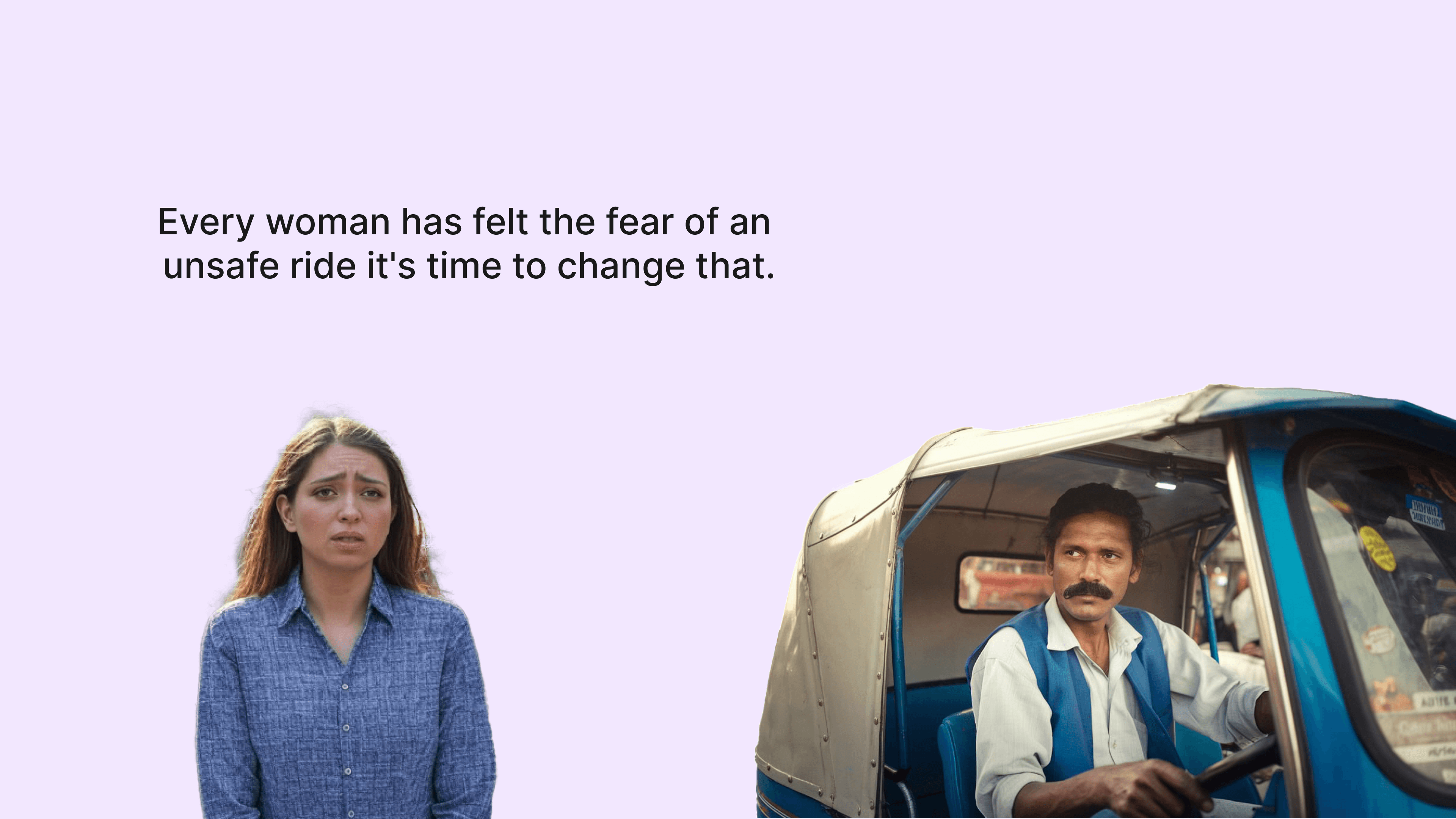
For many women in Indian cities, daily travel comes with invisible stress:
“Is it safe?”
“Can I trust the driver?”
“What if something goes wrong?”
Most ride apps add safety features, but the experience still feels reactive and overwhelming.
I wanted to design an interface where trust is built proactively, not added as an afterthought.
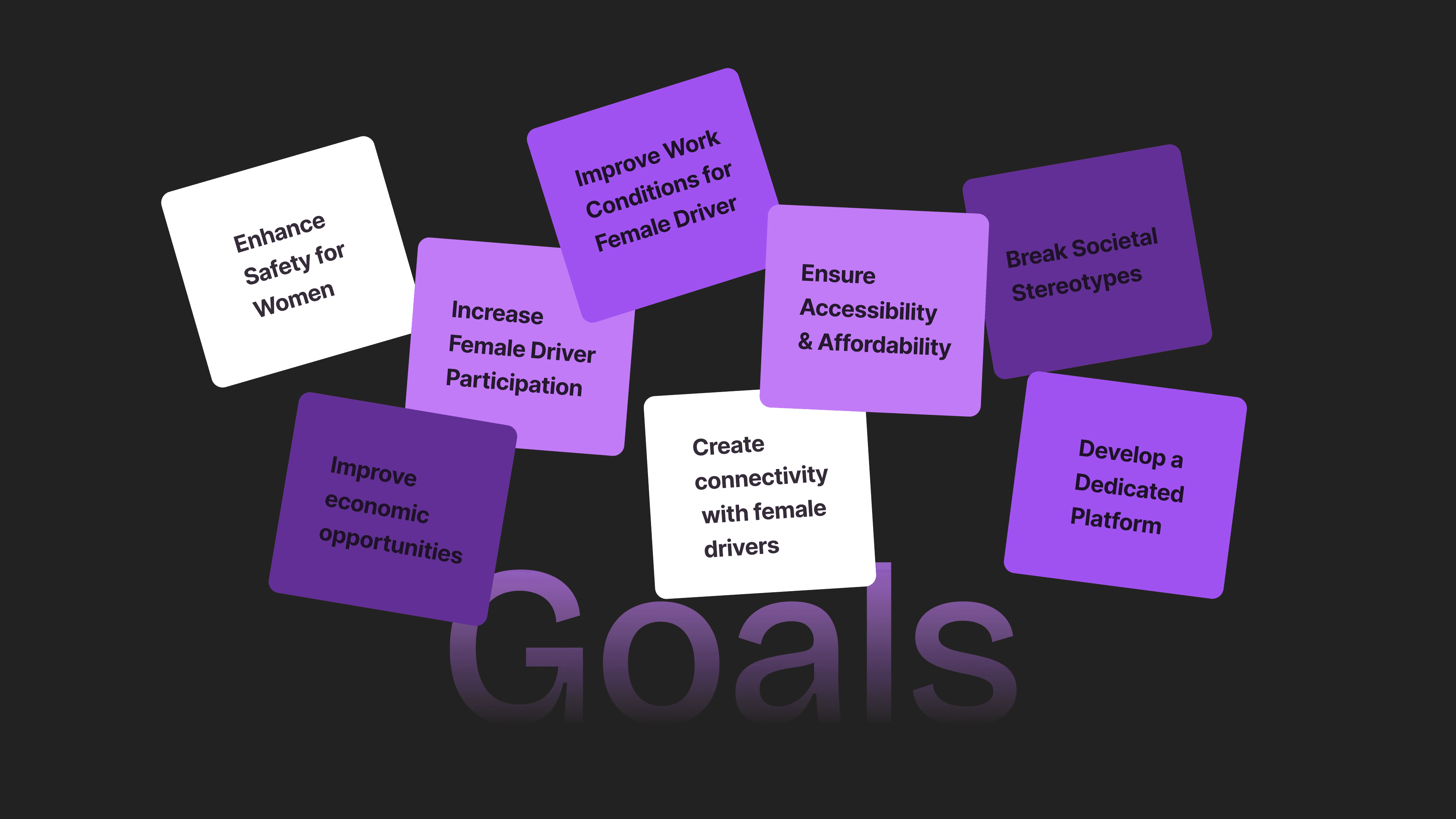
Our Goals
Design a ride-booking experience that helps women feel:
✅ In control
✅ More confident before booking
✅ Safe during the ride
✅ Supported if anything feels off
Key Insight
The biggest pain point wasn’t booking the ride.
It was the moment before booking, where doubt begins.
That hesitation moment is the true “drop-off” point in the journey.
So instead of designing only for the ride, I designed for the emotional gap before the ride.
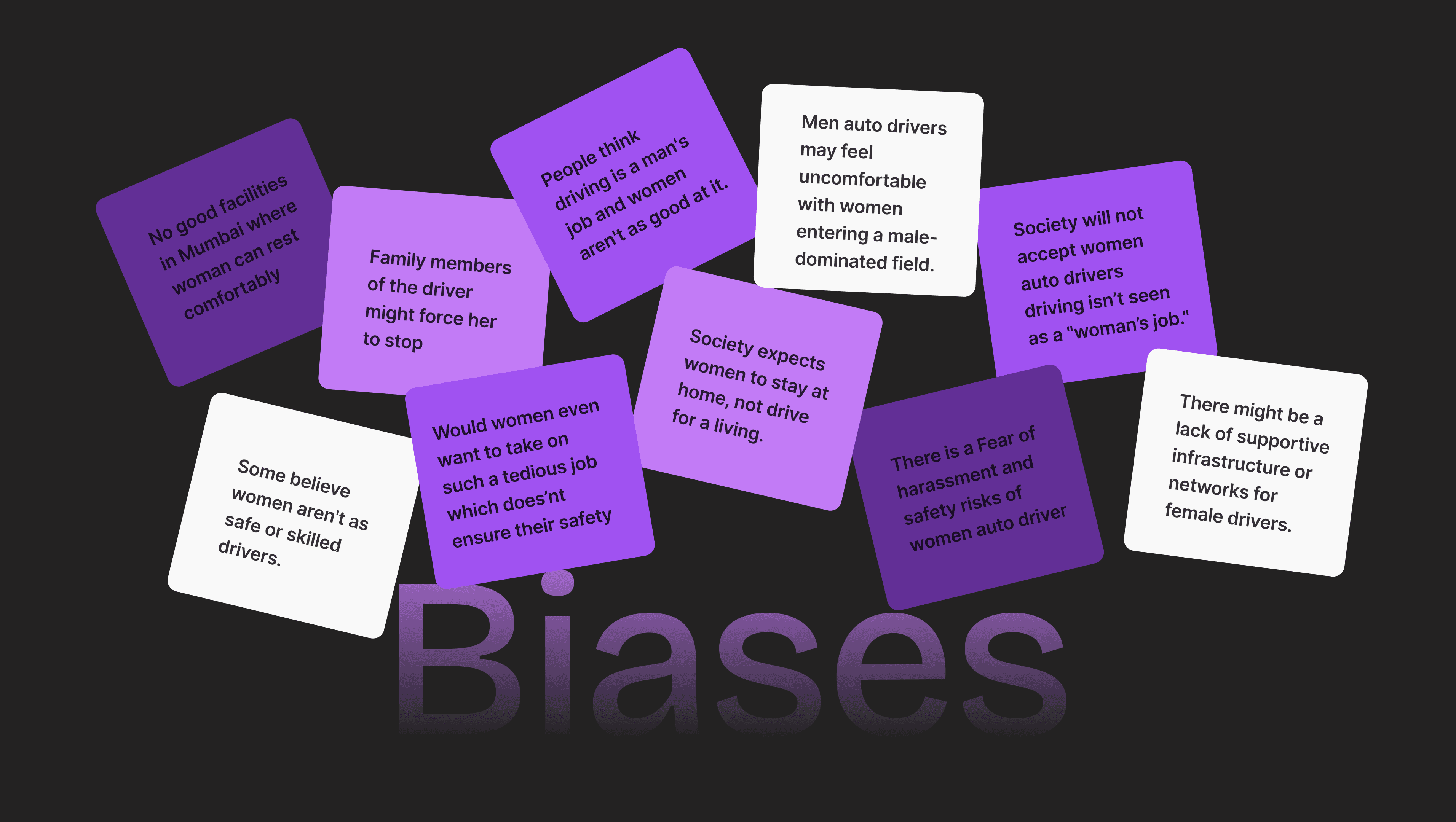
Research Takeways
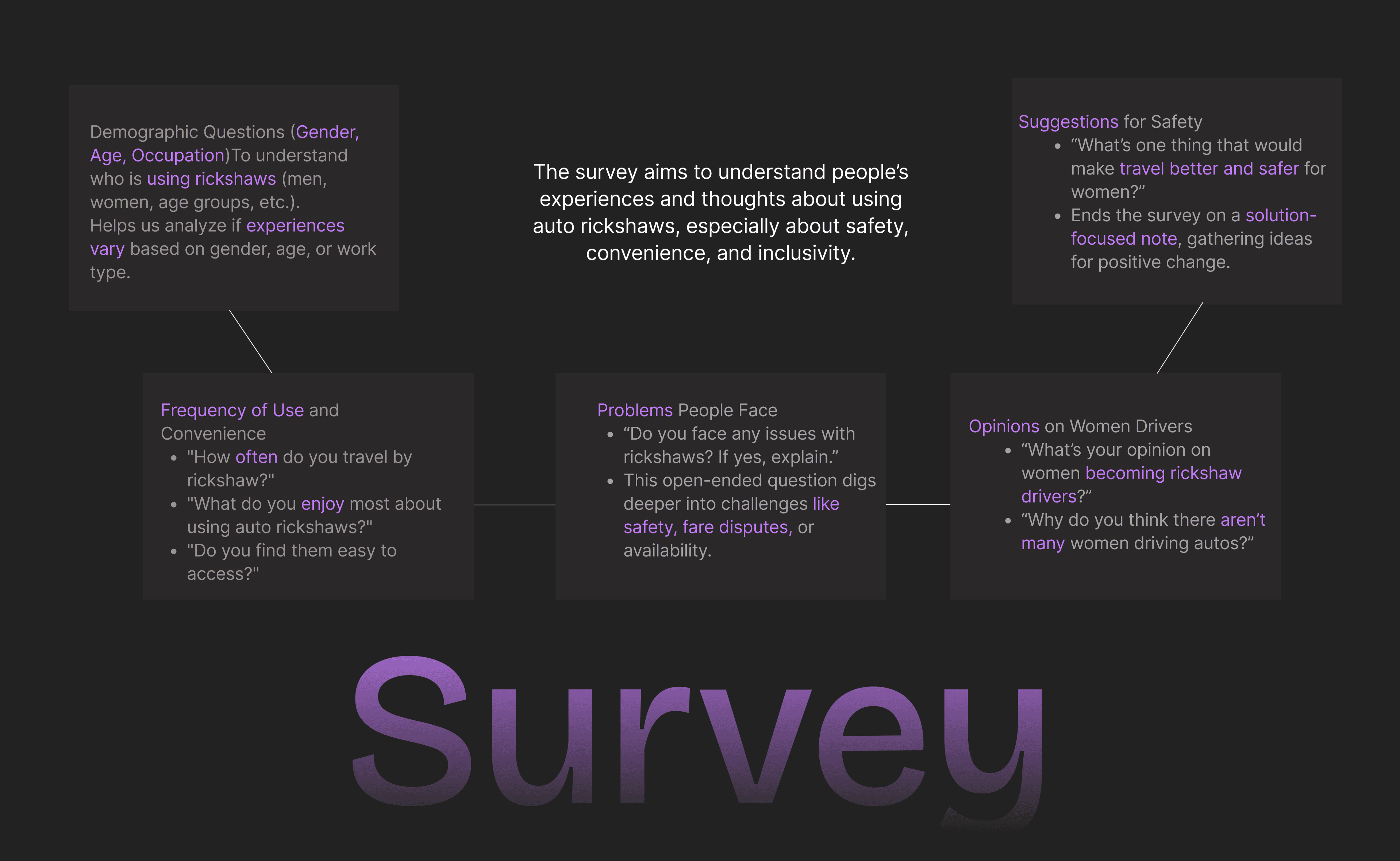
Research Takeaways
Trust must appear early
Women feel safer when verification is visible before confirming the ride.
✅ So I brought trust cues upfront instead of burying them in menus.Control reduces anxiety
People want quick access to emergency actions and clear ride visibility.
✅ So I kept safety tools always within reach.Safety should feel calm, not alarming
Overly loud UI can increase panic instead of helping.
✅ So I used a visually calm interface with high clarity.
Design Principles
To keep the experience consistent, I worked with 4 design principles:
1. Calm over chaos
Reduce visual noise. Prioritize clarity.
The UI should feel like reassurance, not stress.
2. Control first
The user should always know what’s happening and what to do next.
3. Trust is a UI layer
Trust isn’t one feature, it’s built through every screen using cues, language and structure.
4. Proactive safety
Safety should be built into the default journey, not only shown during emergencies.
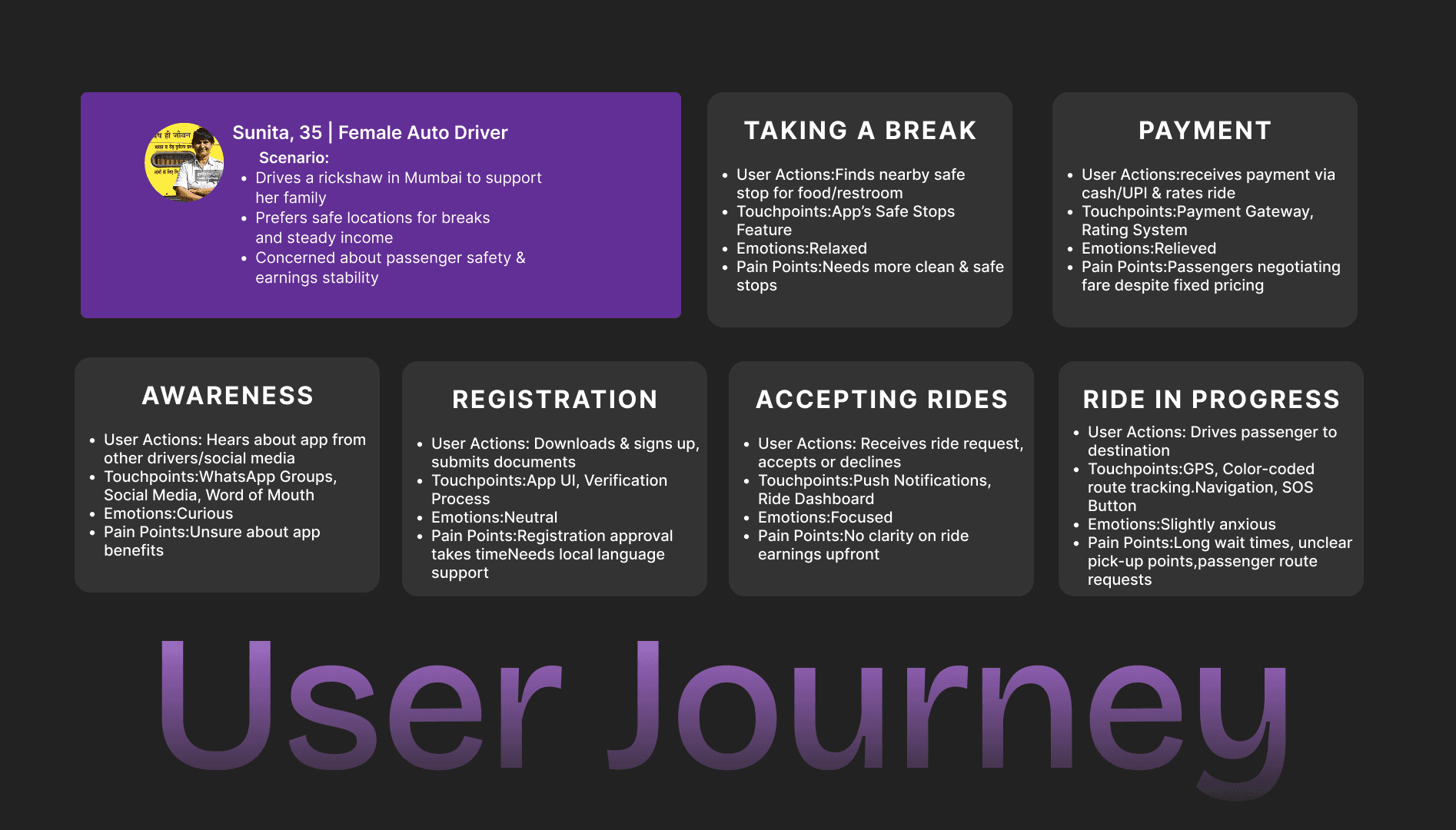
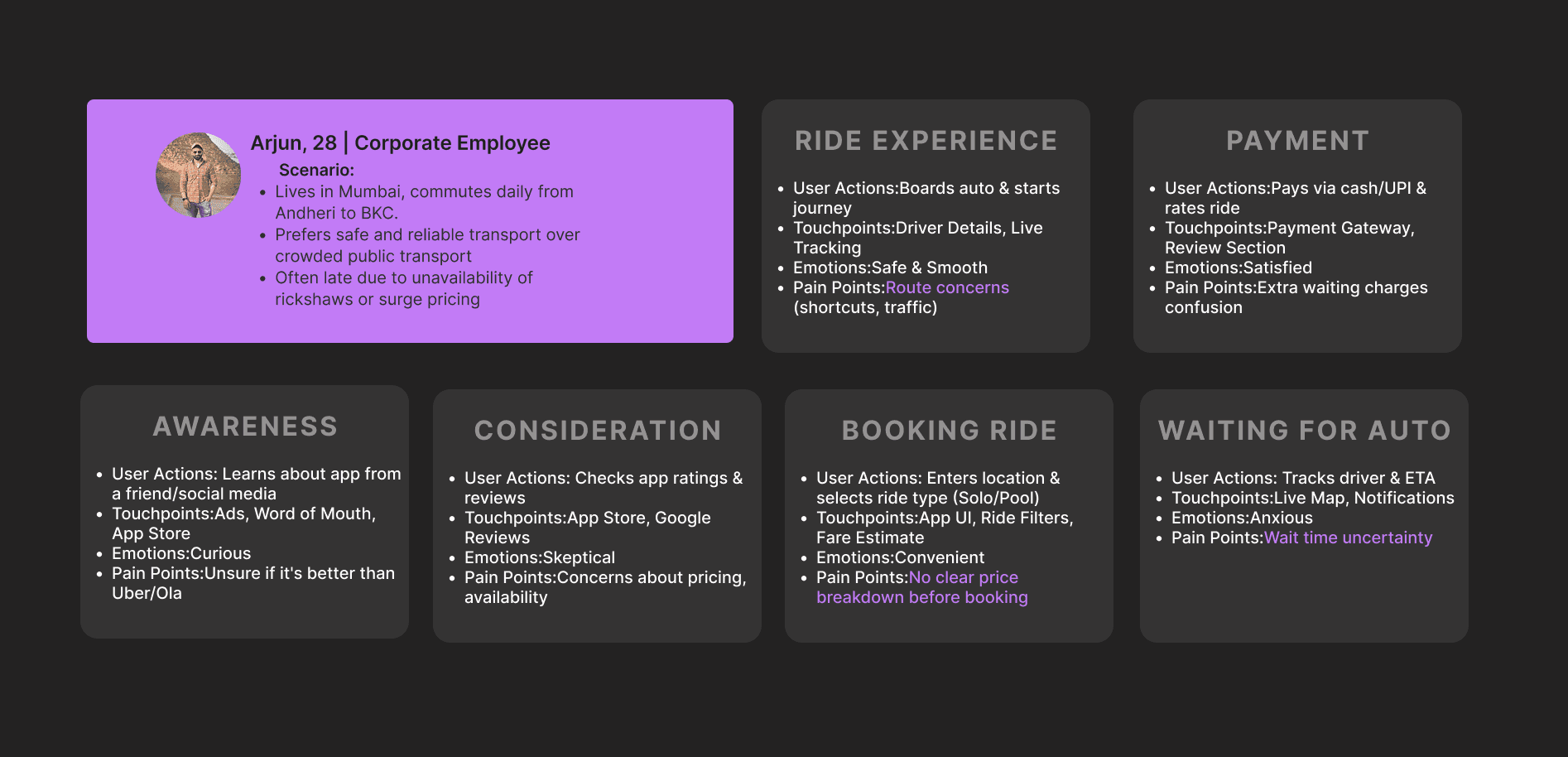
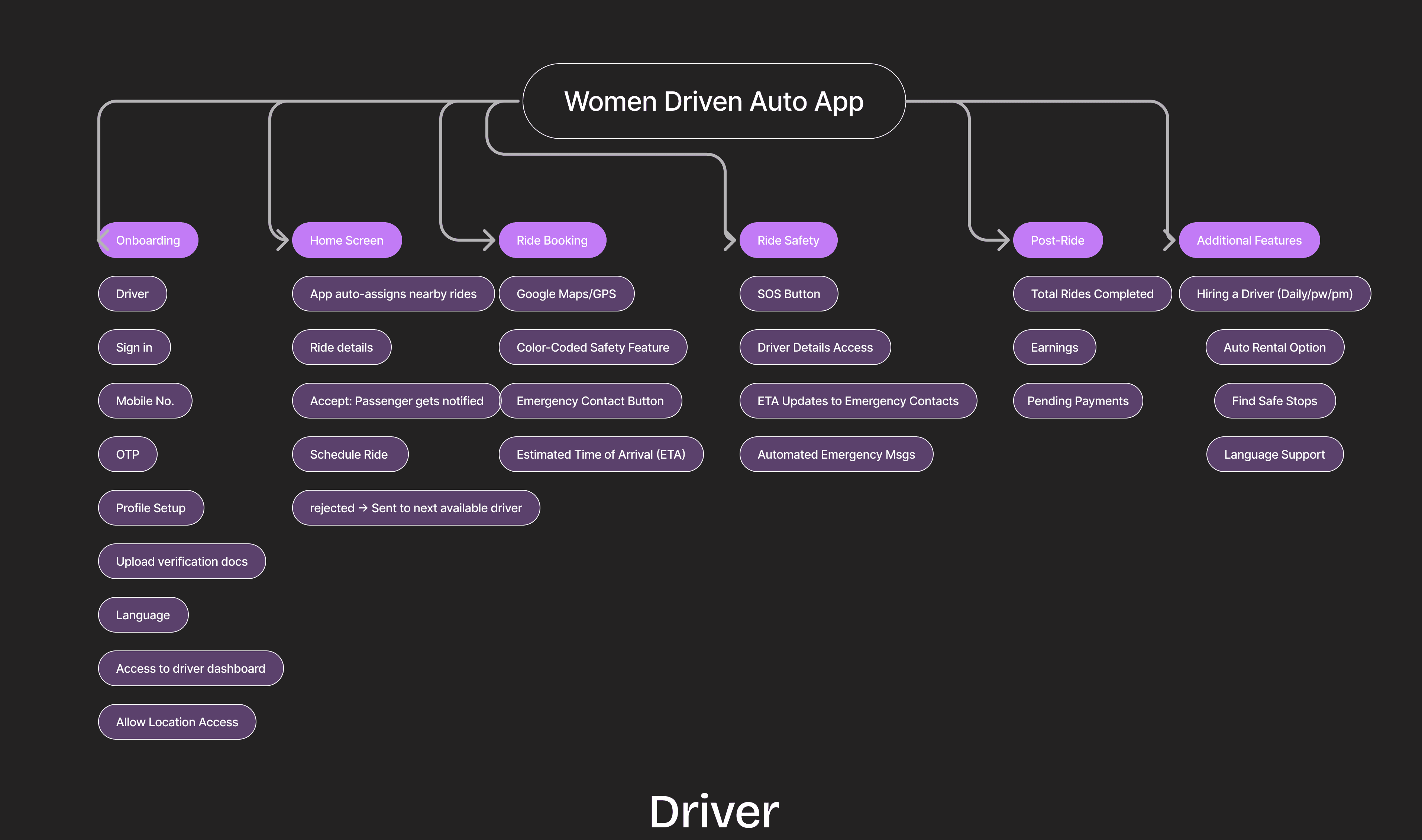
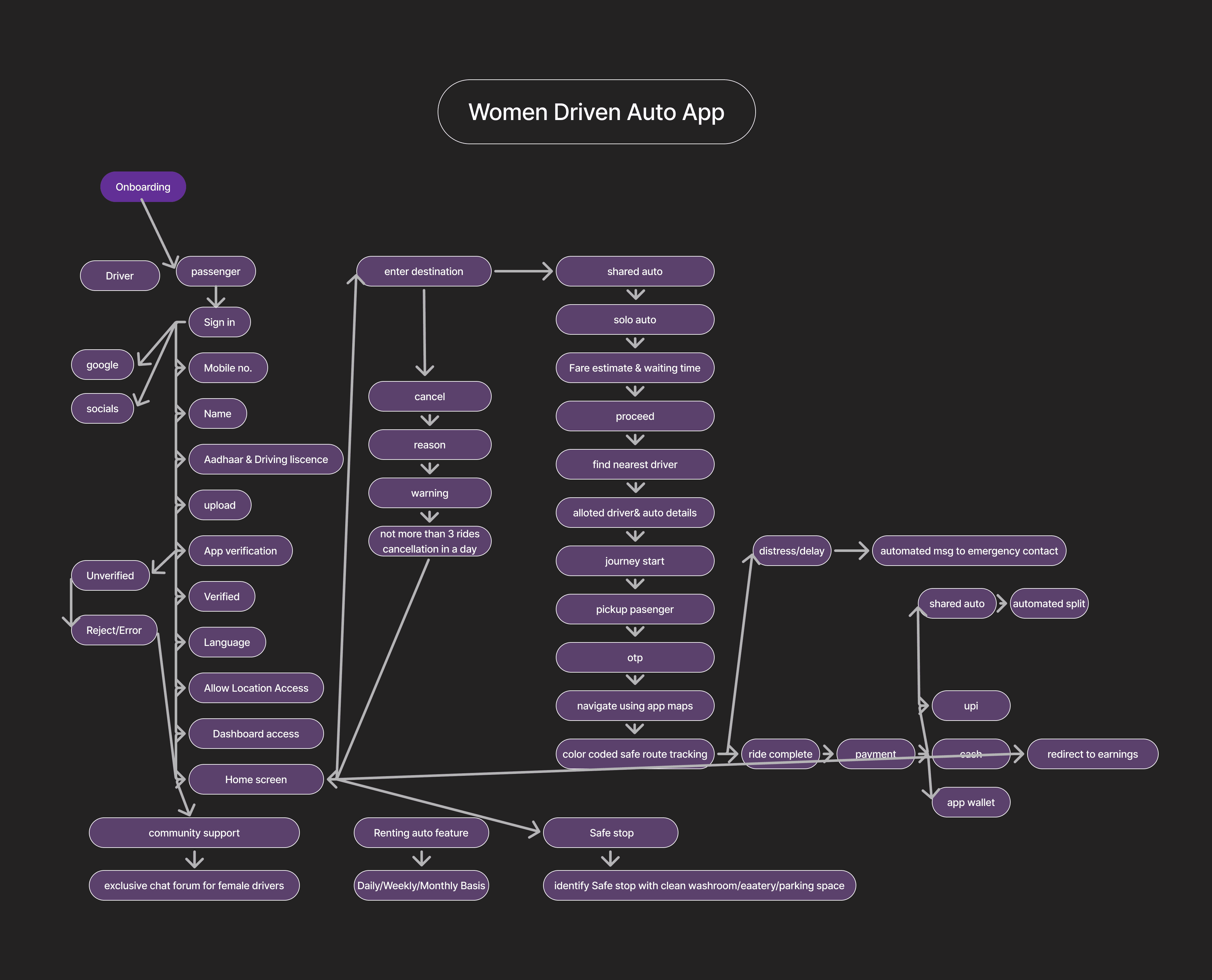
Information Architecture & Flow
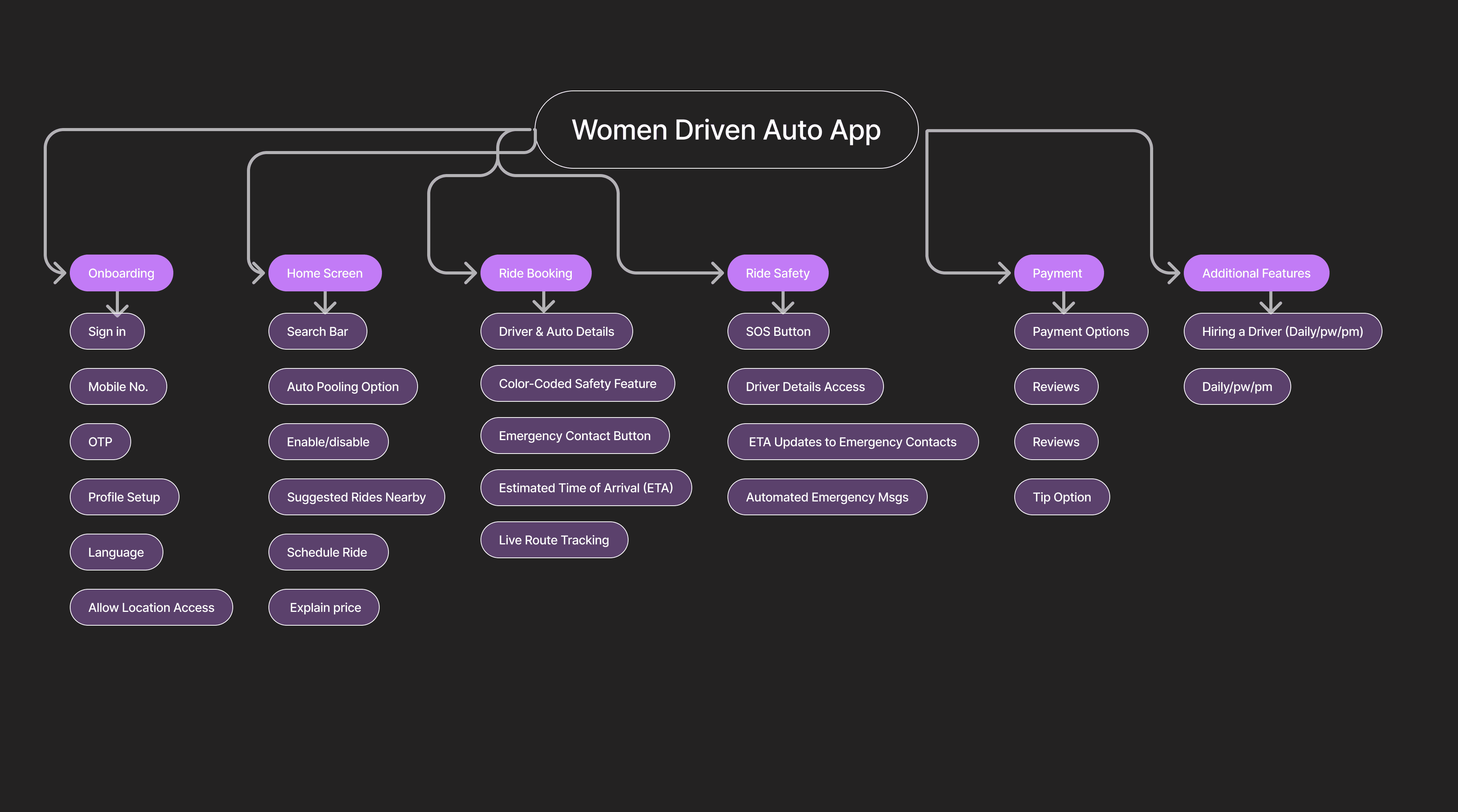
I kept the flow minimal and predictable so it can be used quickly.
Flow Overview
Set pickup & drop
View women-led driver match
Confirm ride with trust cues
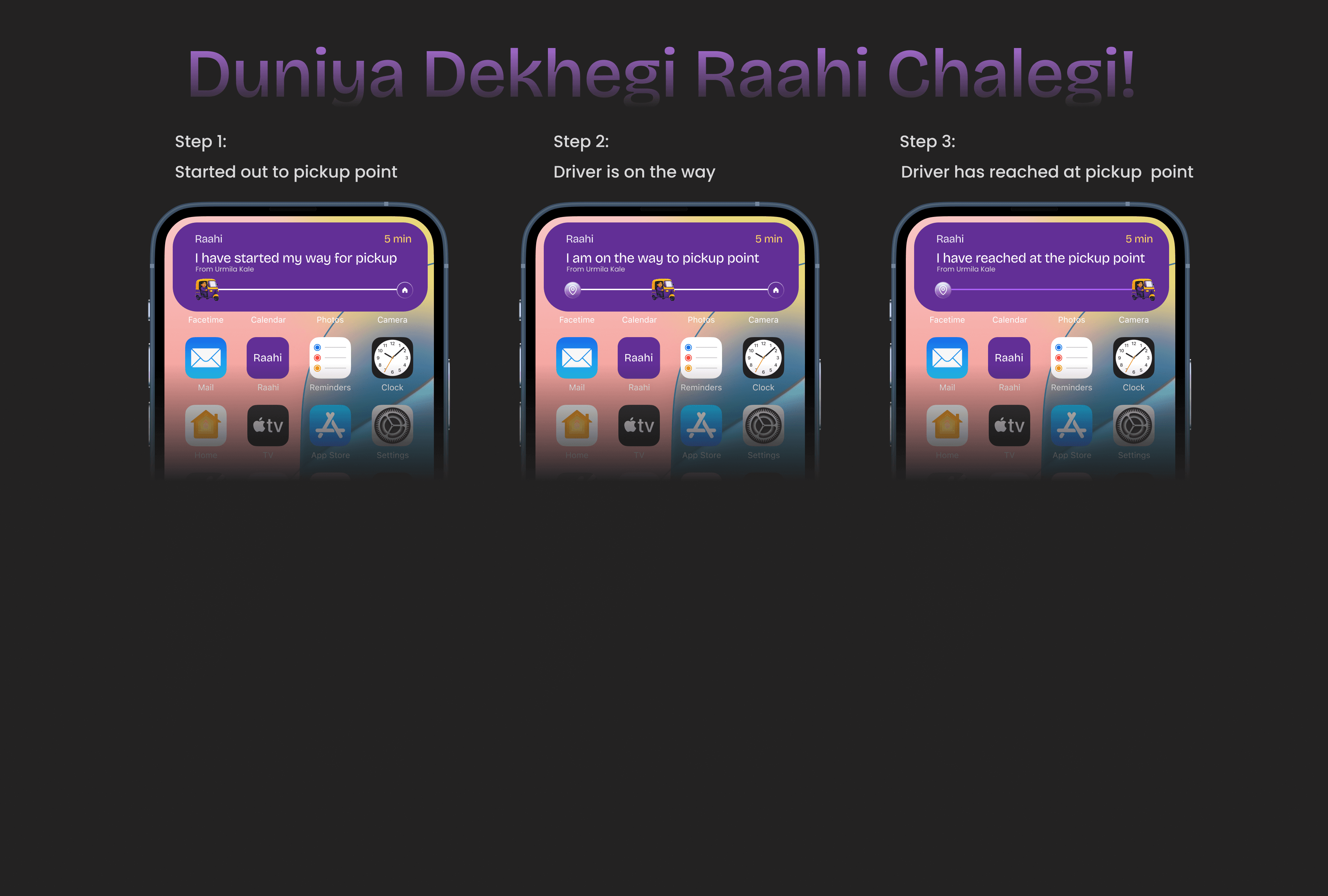
Track ride with quick safety access
Complete ride + feedback/reporting
This structure reduces decision fatigue and keeps safety tools available without overwhelming the user.
Key Screens & Design Decisions
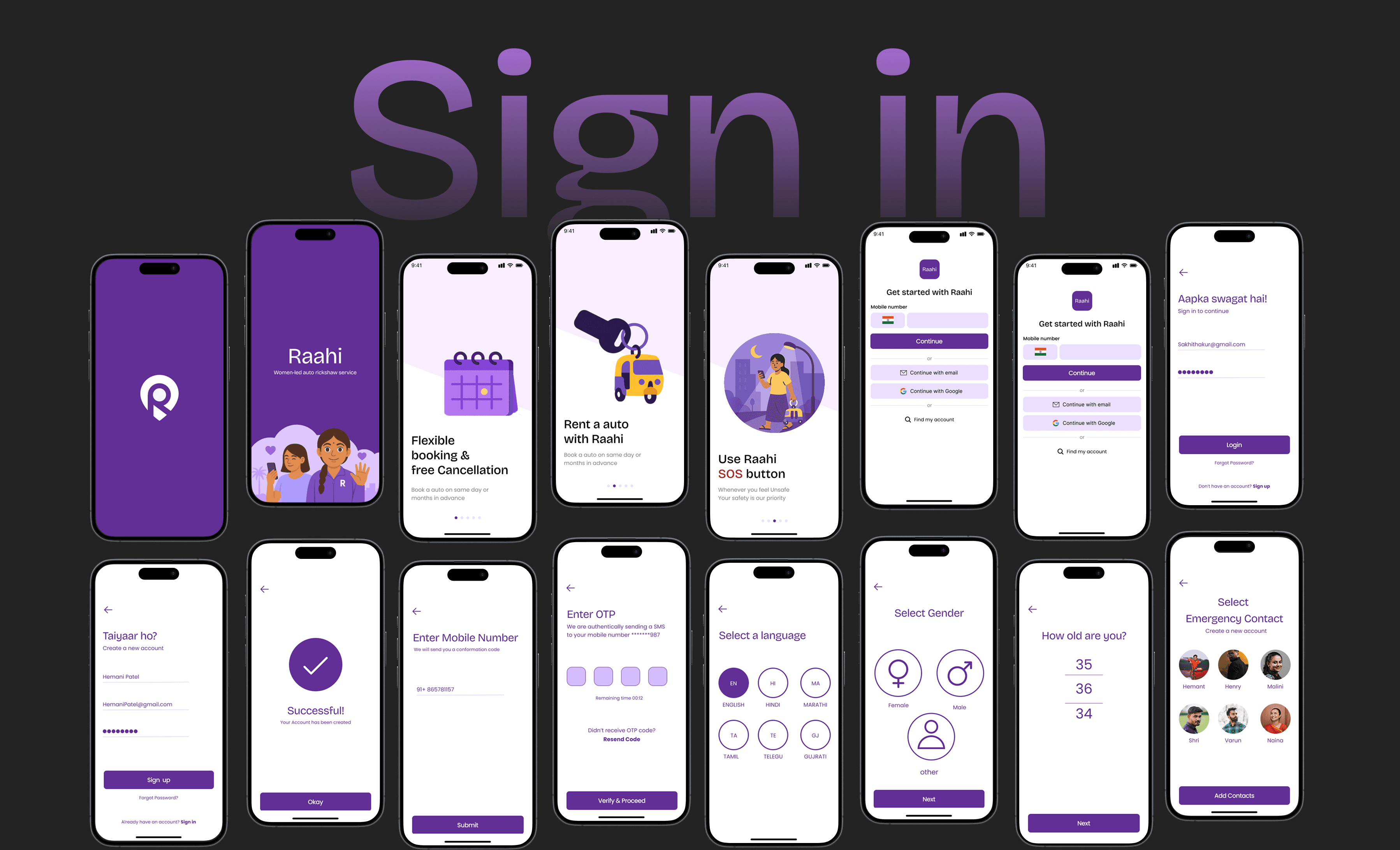
✅ Home screen (Fast booking + confidence)
Problem: Users hesitate at the beginning.
Design decision: Make booking instantly understandable with clear hierarchy.
What I prioritised
Minimal input friction
Strong CTA clarity
Safe tone in language and layout
✅ Driver match screen (Trust first, not hidden)
Problem: Trust is usually buried in profile screens.
Design decision: Show trust signals early.
Features integrated
Verified women drivers badge
Profile preview (photo + ID proof)
Ride details visible before confirmation
Result: The user feels informed before committing.
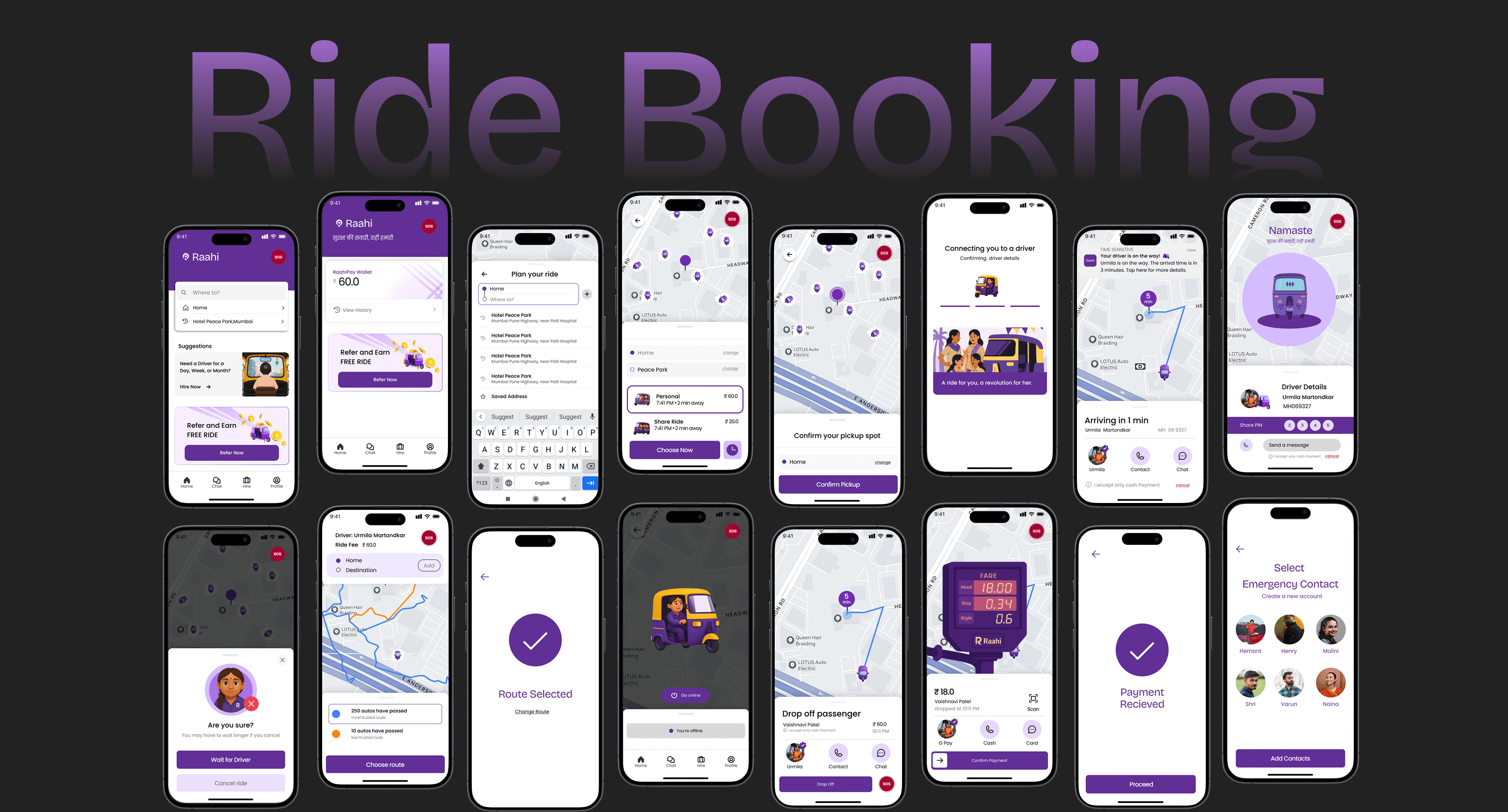
✅ Live Tracking (Visibility = reassurance)
Problem: Anxiety increases when users don’t know what’s happening.
Design decision: Make tracking calm and transparent.
What’s always visible
Route progress
Driver + vehicle details
Ride status updates
Result: The ride feels predictable and safe.
✅ Safety tools (Accessible but not scary)
Problem: Emergency options are often hidden or too dramatic.
Design decision: Keep SOS accessible, but visually calm.
Safety actions included
SOS
Share Trip
Call emergency contact
Quick reporting options
Result: The user feels supported without UI panic.
✅ Ride completion + Feedback
Problem: Users need emotional closure after a ride.
Design decision: End the journey with reassurance + control.
Included
Ride completion confirmation
Driver rating
Report or flag experience safely
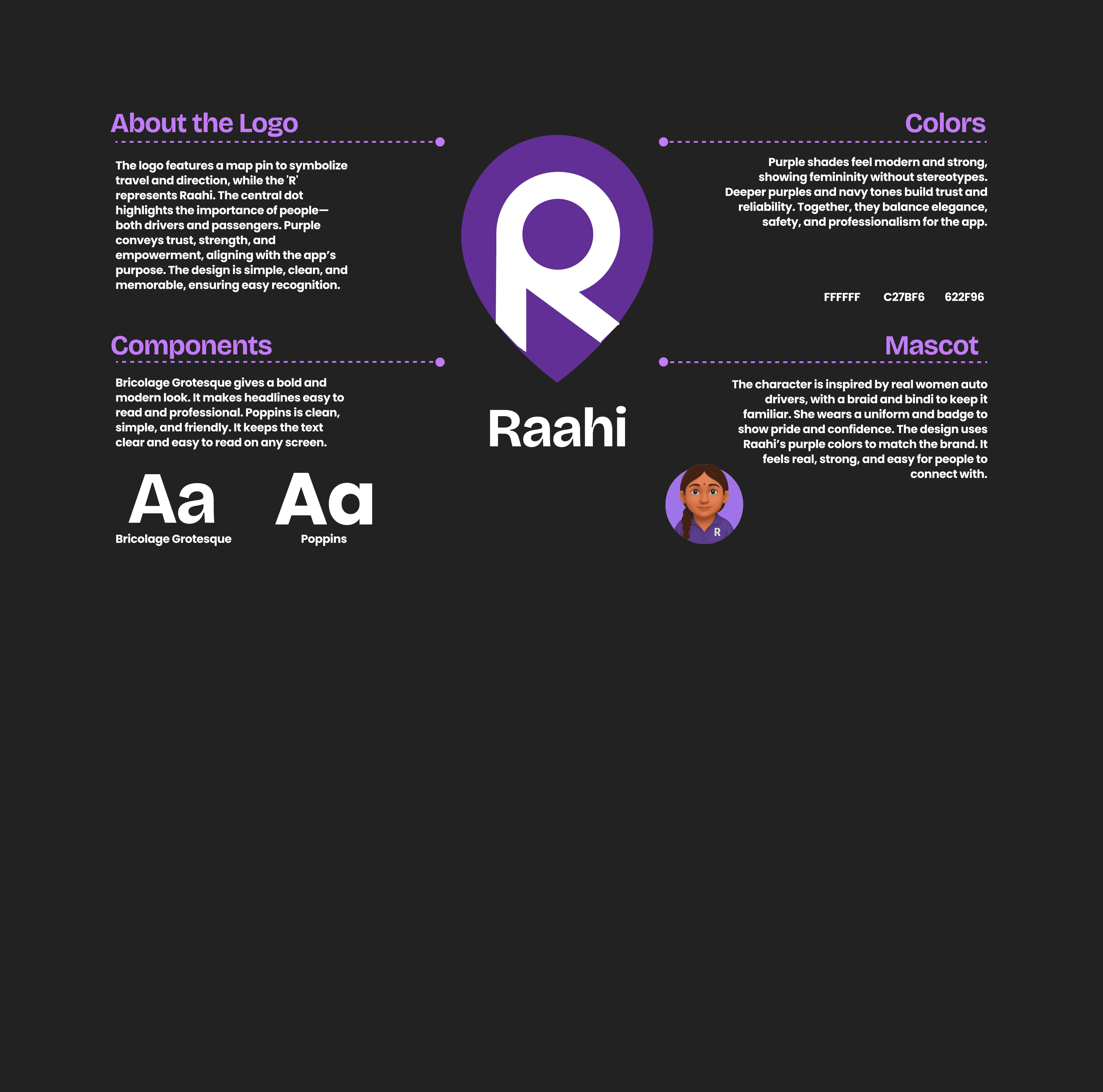
Visual Design Language
My Learnings
Raahi helped me understand that designing for safety is not only about adding emergency buttons.
It’s about designing for emotion, hesitation, and trust.This project taught me how to translate a sensitive
social problem into a digital experience that feels simple, supportive, and empowering.
(Client Review)


Franklin turned Archin Design Studio’s ideas into clean brand. and perfectly aligned with our vision
John Watson
Founder, Archin Design Studio
(Project)
Next Project

We’ve collaborated with companies from diverse sectors to turn their visions into reality. Here’s a look at some of our featured work.
03
/ 03
Aeorim

Year
2023
Role
Website Designer
Services
Branding
Revamp
Development
Designing